3 Must-Use VoIP Products for Service Providers
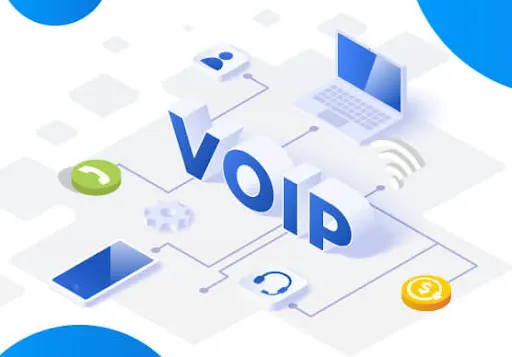
VoIP software solutions are emerging as a path-breaking technology in modern communication. They have helped the telecommunications industry move from cumbersome hardware tools and devices to cutting-edge software solutions.
Today, VoIP service providers have an array of VoIP solutions and products they can deploy to offer customers seamless, VoIP-enabled communication and collaboration. These solutions range from ready-to-use products to customized software and tools. They also help VoIP service providers and VoIP development companies run their business efficiently and increase revenue through multiple revenue streams.
So which products and tools should every VoIP service provider have in their kit? Let us look at the top 3 products:
- Mobile SIP Dialer
The mobile SIP dialer app has transformed the global communication industry by giving enterprises and individuals uninterrupted communication channels with crystal-clear voice quality.
Mobile SIP dialers use Session Initiation Protocol (SIP) technology to start and manage calls. Since this is based on VoIP technology, it cuts costs significantly for users. This way, enterprises can enjoy advanced communication at cost-effective rates.
Mobile SIP dialers combine two powerful technologies: VoIP and mobile app development. They use SIP codecs and the SIP protocol to make calls. A SIP dialer is a tool that enables seamless, feature-rich communication, whether within an enterprise or with external customers. Using SIP to start, conduct, and end calls, mobile dialers use advanced VoIP technology to offer HD voice quality to users.
Mobile SIP dialers are also much more than voice-calling apps. They support other kinds of communication such as video calling, instant messaging, file sharing, and three-way conferencing. Customer service executives can start conference calls with customers without asking them to download an extra app or software, even when the employees are working remotely.
Besides these key communication features, mobile SIP dialers also come with features like a phone book, last call redial, and call history, which make them an end-to-end communication solution.
Let’s look at some of the key features of mobile SIP dialers that are making them an integral part of business communication systems.
- User-friendly graphical interface: This makes the application easy for users to handle.
- Seamless integration with the mobile phone book: You can integrate your existing phone book with your mobile SIP dialer.
- White labeling: Even though a mobile SIP dialer is owned by a third party, enterprises can customize it and use it with their own brand and logo.
- Robust security: Mobile SIP dialers provide end-to-end encryption of calls and data, user authentication, and monitoring and tracking tools. This adds layers of protection to your communication.
- Seamless remote working: The cloud-based communication and advanced UC tools of mobile SIP dialers let customer service executives stay in touch with clients from anywhere.
- Easy integrations: Cloud-based mobile SIP dialers allow easy CRM integrations, which means faster workflows and less human error.
- Codec support: One of the standout features of mobile SIP dialers is their wide codec support. Codecs such as G729, GSM, Speex, and AMR are easily supported.
- Payment gateway integration: This feature has become a critical part of business communication. Mobile SIP dialers integrate smoothly with any payment gateway.
- VoIP Softswitch
Telephones and switchboards date back to the early 1900s. But a lot has changed since then, and switching (connecting two lines together) is now powered by software.
Most networks today use various combinations of telephony switches and hardware. One of these is a softswitch. A softswitch is an automated version of a switchboard. It is a device within a telephone network and is controlled by a call agent that sends information to gateways, whether the Media Gateway, the Access Gateway Control Function, or a Signaling Gateway. These gateways act as interaction points with the PSTN and with IP networks.
A softswitch acts as a VoIP server that lets telecommunication networks manage voice, fax, data and video traffic, as well as call routing. A VoIP softswitch enables calls between IP and traditional networks and handles functions like routing, billing, reporting, and monitoring of VoIP services. It also acts as a link between VoIP and PSTN calls.
How does a VoIP softswitch work? When told to make a call, a VoIP softswitch first looks in its own database for the recipient’s IP address. If it cannot find the IP address, it passes the request to another softswitch, and so on until the correct IP address is found. Otherwise, it hands the call off to the PSTN.
VoIP softswitches can be divided into Class 4 and Class 5 softswitches.
- Class 4 Softswitch: It handles the routing of large volumes of calls. It operates on a larger scale and is suitable for long-distance and international calls.
- Class 5 Softswitch: It focuses on smaller areas and is suitable for domestic calls and calls within smaller geographical areas. It handles a limited number of calls and has to connect to a Class 4 softswitch to make international calls.
- Multi-Tenant Conferencing Solution
Multi-tenant conferencing solutions are mainly used by contact centers to run high-quality audio, video, and web conferencing. They help contact centers reach a mass audience effectively and strengthen remote collaboration and virtual events with crystal-clear audio and video.
There are three kinds of multi-tenant conferencing solutions:
- Multi-tenant audio conferencing solution: It lets multiple users join a single audio conference call and connects multiple tenants or called parties through a conferencing bridge.
- Multi-tenant video conferencing solution: It lets multiple parties collaborate through a single VoIP-based conferencing bridge. The solution uses open-source software like WebRTC and FreeSWITCH to provide top-quality video communication.
- Multi-tenant web conferencing solution: It lets users share their computer screens and connect with each other over the internet. This helps contact centers deal with customers’ technical issues more effectively.
Contact centers can gain a lot from multi-tenant conferencing solutions. The advantages include easy customization and upgrades, as well as cost savings.
Conclusion
VoIP-powered communication is becoming commonplace in enterprises. As the corporate world moves towards internet telephony, VoIP service providers are increasingly adopting new, cutting-edge VoIP products and solutions. These make business operations seamless and let their customers enjoy the high productivity and low costs that naturally come with using these tools.