Why a PayPal Account Gets Limited and How to Prevent It (Updated for 2026)
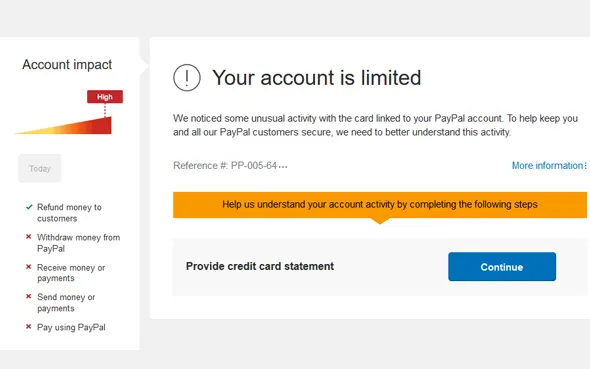
Nearly everyone uses PayPal. But do you know why PayPal accounts get limited? If not, we are here to help you understand why a PayPal account gets limited and how you can prevent it from happening to you.
We have tried to cover every reason why a PayPal account gets limited.
Also Check: Skillshare Free: Download Any Course from Skillshare
Reasons Why a PayPal Account Gets Limited
- You received too much money into your account (this can be any amount out of proportion to what you normally receive over the average history of your account).
- You transferred too much money out of your account ($2,000 US is the rumoured amount that triggers the fraud system).
- You called PayPal customer service and made somebody angry (there are documented cases of irate customers calling PayPal, only to find their accounts limited moments after the call).
- PayPal has reason to believe you have more than the allowed two PayPal accounts (one Personal account and one Premier account).
- Somebody filed a complaint with PayPal about you (a buyer, a seller or an interested third party).
- You filed a complaint against somebody (a buyer or a seller).
- You initiated a chargeback with your credit card company.
- You initiated a chargeback with your credit card company before you filed a claim through PayPal’s Buyer or Seller Protection Program.
- PayPal thinks you are trying to avoid PayPal fees by charging excessive shipping and handling fees on your sales.
- PayPal thinks you are using your PayPal account to speculate in the currency market.
- PayPal doesn’t agree with some content on your website (for example, a man who ran a well-known news blog and accepted PayPal donations on it had his PayPal account limited because his website contained a link to the Pearl terrorist killing).
- PayPal believes you are in violation of its User Agreement.
- PayPal believes you are in violation of its Acceptable Use Policy (for example, PayPal believes you used your account to buy a dirty book or magazine).
- PayPal believes you are in violation of its Privacy Policy (for example, you gave the police information about a fraud suspect who is also a PayPal member).
- PayPal believes you are in violation of their User Agreement.
- You used your PayPal debit card to buy material that PayPal finds objectionable (even if it is legal in the real world).
- You charged too much money on your PayPal debit card.
- You went on vacation and used your debit card in another state or country.
- You used your PayPal debit card for an online transaction that did not go through PayPal (or for a telephone order).
- You refunded a buyer through your PayPal account but did not use the proper refund method.
- You lost a dispute claim.
- You are late paying your eBay fees, or you owe eBay money.
- You received a negative feedback comment on your eBay account.
- You chose to use your PayPal account without verifying it.
- PayPal believes your account information is not up to date, even if it has no grounds to believe so.
- PayPal tried to contact you by phone and you did not answer.
- You were the victim of fraud (for example, you clicked a link in an email you thought was from PayPal, but it was really a phishing website).
- You reported an unauthorized purchase made on your PayPal account or credit card to PayPal.
- You moved into a house or apartment previously occupied by somebody with a limited PayPal account.
- You logged into your PayPal account from a location other than your usual one (for example, a friend’s house or your workplace).
- PayPal has linked your account with another person who has a limited account or outstanding issues to resolve with PayPal.
- PayPal froze your account because it linked you as “associated” with a family member who has an outstanding PayPal problem.
- After running a credit check on you, PayPal found your credit score was too high or too low, or you had too many open lines of credit or debt.
- A third party contacts PayPal and says, without evidence, that you are engaging in fraudulent activity.
- PayPal suspects you are engaging in fraudulent activity.
- PayPal believes your business practices are risky and could harm you, PayPal and other PayPal members.
- The phone number you registered with PayPal happens to be the same as that of somebody who has or had PayPal problems.
- Your new provider has an IP number that was associated with somebody who has or had PayPal problems.
- You made a transaction with an individual (such as a buyer or a seller) who has PayPal problems. PayPal will “link” you with that person.
- You sold something and the buyer was a con artist or scammer. You get “linked” to that person.
- You violated PayPal’s user agreement by posting anti-PayPal writing or opinions in a public place (for example, the internet).
- Your name, address, phone number or ISP is SIMILAR to that of a person who has or had PayPal problems.
- You were associated with a person who has a frozen PayPal account.
- You refused PayPal’s request for very private information about yourself.
- PayPal requested information from you, and you supplied it, but not fast enough.
- You logged into your PayPal account from a public internet cafe.
- You sold an item on eBay that scammers like to sell (high-priced or popular items such as Rolex watches, PlayStations and computers).
- You sold an e-book to a buyer who later filed a complaint against you, and when PayPal asked you for a tracking number, you could not provide one.
- You logged in to PayPal’s website using a proxy service or other anonymity software that you use to protect yourself on the internet.
- While registering, you typed your name wrongly in your personal profile (for example, Smith, John when it should be John Smith).
- You bought or sold something on PayPal’s Restricted Items List (academic software, concert tickets, OEM software, surveillance equipment, adult material, etc.).
- You sent money to a country on PayPal’s unauthorized list.
- You received money from a country on PayPal’s unauthorized list.
- The bank account you verified with PayPal was a new account.
- You have a high credit card balance that triggered PayPal’s fraud detection system, since a high card balance means a higher risk that you will engage in fraud.
- PayPal ran a third-party investigation on you and limited your account based on the findings (you have been sued, arrested or charged with a crime, have too many debts, etc.).
- PayPal tried to withdraw money from your bank account or credit card and was declined.
- Your PayPal account shares similar details with an account that has already been frozen.
- Your PayPal account is in the negative.
- Your PayPal account might go into the negative.
- A chargeback was filed against you.
- You tried to modify or change your personal details but were not able to.
- You removed your bank account or credit card information from your PayPal account.
- PayPal believes you are not who you say you are.
- You withdrew or transferred $2,500 or more from your PayPal account within 24 hours or over a weekend.
- You did something unusual (for example, transferred money to a roommate or family member with a PayPal account).
- Your overall withdrawal and deposit activity is “suspicious.”
- The name on your Social Security number does not match EXACTLY the name on your PayPal account (for example, your Social Security card says Robert Smith but your PayPal account name is Bob Smith).
- The name on your bank account or credit card does not MATCH the name on your PayPal account exactly (for example, William Smith vs. Will Smith or Bob Smith).
- There are another 100 or more fraud triggers, unknown to the general public, that can lead to an unpleasant experience with PayPal.
Those are all the reasons we have found so far for why a PayPal account gets limited. In our next article, we will cover how to prevent your PayPal account from getting limited.